Blog
The Governance Gap: Bridging the Gap Between Policy and Execution
23 Oct 2026

Most organisations have a governance framework. There are policies, procedure manuals, and tons of reference. It all looks good. They are approved by the board and tucked away.
But something is missing. This is the governance gap - the problem between the policies on paper and the decisions and actions in practice - the difference between 'what's here' and 'what's done'. Good corporate governance is more about ensuring that the policies that have been created translate into everyday decision-making and actions. That's what's really important.
People run your organisation – policy binders don’t.
Why Strong Policies Do Not Always Translate into Effective Governance
Having strong policies does not always translate to strong governance practices. Policies can be developed without being really implementable, with no process around their execution. There could be competing priorities, scattered information, and manual processes. Directors are busy. Management is focused elsewhere. And so the subtle but dangerous shift occurs, where the difference between having a governance framework and executing it gets blurred. Because while you can have the first without the second, the second cannot occur without the first.
Where the Governance Gap Appears in Practice
A governance gap occurs when there is a lack of execution of decisions and actions. Where policies are written, ticked off, but not followed up.
Examples of such gaps:
Delayed actions & weak follow-through: Board decisions and actions get tabled, but no one follows up or tracks their execution. They get forgotten, delayed, or even lost.
Unclear ownership & accountability: Tasks get left hanging because nobody has been assigned responsibility or given due dates. Who exactly is supposed to do this and by when? Stakeholders may assume that someone else will take care of it.
Scattered information & limited visibility: There is a lack of collated information or understanding among directors and company secretaries about what has been decided and what actions are needed. What decisions need to be taken, what has been decided, and what follow-up actions still need to be completed.
Real-World Examples of Governance Execution Falling Short
Here are examples of where organisations may find governance execution gaps:
Decisions made but no closure achieved: In meeting minutes, a decision has been noted, but nobody tracks its execution. The action is lost and forgotten. Or the required follow-up has not been done.
Compliance deadlines not met: A compliance requirement has been noted, but there has not been sufficient follow-up to meet the deadline.
Board evaluations without improvements: Following a board evaluation, a number of improvement areas have been noted, but there is no system to ensure that these recommendations are completed.
Board oversight without visibility: Directors are unaware of any incomplete actions and decisions between meetings. They cannot see what has been decided, what decisions need to be made, and what follow-up actions are necessary.
The governance gap is therefore the gap between documenting and executing the requirements of good governance.
Why Accountability Must Continue Beyond Policy Creation
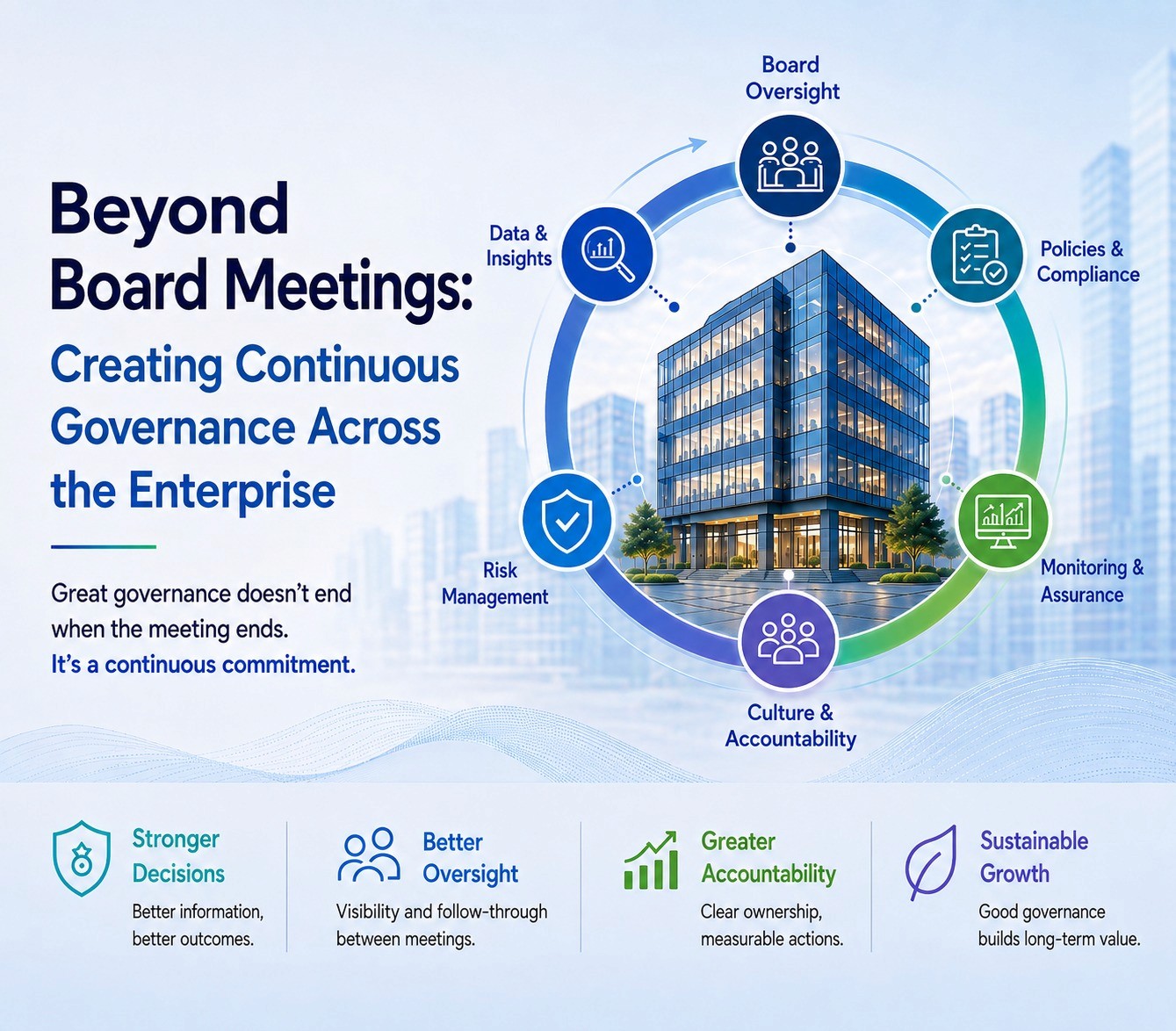
Governance does not end when policies are approved, and decisions are recorded. There must also be accountability to make sure that these actions continue to be followed up, updated, and documented. To ensure that organisations are continuously governed, they can ensure that those responsible are made accountable by assigning owners and due dates to actions, and ensuring that directors are aware of any overdue actions and incomplete items between meetings.
The moment a policy is signed, the real work of governance execution begins. And accountability plays a large role in ensuring that what has been authorised is also put into practice.
Turning Governance Frameworks into Everyday Decision-Making Practices
What can organisations do to ensure that policy translates into practice?
Make decisions actionable: Ensure that decisions are turned into action items with owners and due dates
Keep directors & company secretaries informed: Ensure they have visibility of pending and overdue actions, decisions to be taken, and any related updates between meetings
Store governance information centrally: Collate and store documents, decisions, communication, reminders, and action items in one secure place
Strengthen follow-through with technology: Use appropriate technology to help with the processes around meetings and any required follow-up.
The objective is to make governance an ongoing process through effective execution.
How BoardEye Supports Continuous Board Governance
This is where a tool like Axar Digital's BoardEye can help organisations turn their focus from meeting-based governance to continuous governance.
With features such as:
Action Tracker to assign and track action items;
Smart Minutes to capture and execute decisions;
Dashboards to provide information on meetings and documents;
Continuous Compliance Manager to track compliance requirements.
BoardEye makes sure that governance is continuous and visible. It focuses on making sure that accountability is there long after the meeting has ended.
Closing: Bridge the Gap Between Policy and Execution
Good governance is all about making sure that policies translate into decisions, actions, and results. Organisations need to ensure that accountability is maintained long after any policy has been created.
That is what we do at Axar Digital. With BoardEye, we work with organisations to make sure that there is continuous board governance. So why not book a walkthrough today to see how BoardEye can help your organisation ensure continuous governance?
FAQs
1. What exactly is the governance gap?
It is the disconnect between written policies and how governance actually works day-to-day, especially when decisions stall and follow-through is weak.
2. Why do strong policies still fail in practice?
Policies often become documentation exercises, and competing priorities, fragmented information, and manual tracking make execution inconsistent.
3. Where does the governance gap show up most often?
Usually in delayed board actions, unclear ownership, missed compliance deadlines, and limited director visibility between meetings.
4. How can organisations close the governance gap?
Make decisions actionable, assign clear owners and deadlines, centralise governance information, and track progress continuously with technology.
5. How can Axar Digital’s BoardEye help with this?
Schedule a walkthrough with Axar Digital to see how BoardEye supports continuous, accountable board governance.