Blog
Langar and Karseva – ideas whose time has come again!
Oct 7, 2025
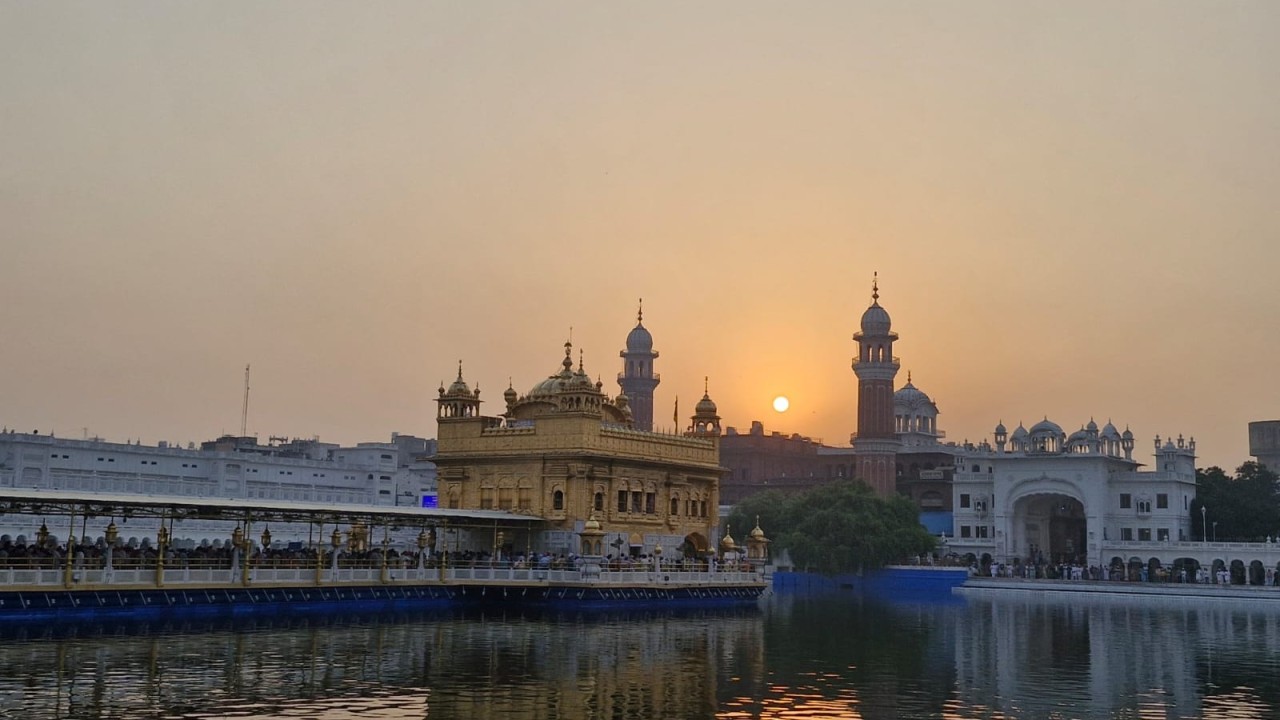
On September 26, 2025, for the first time in my life, I took darshan of Sri Guru Granth Sahib at the Sachkhand Sri Harmandir Sahib. Another first for me was last Sunday, September 28, 2025. I did Kar Seva at Sri Harmandir Sahib, Amritsar, of washing the utensils in which people partake of the langar. One hour of simple labour with similarly oriented people of all ages and both sexes and with totally diverse backgrounds. At the Sri Harmandir Sahib, I wasn’t asked any questions. I was just shown the place I could contribute at. One of the volunteers showed me how to use the soap and scrubber, and the people already providing that service allowed me in and made space for me to work alongside them. I was able to learn how to do the job by briefly watching those around me, doing it almost ‘passionately’ for a little over an hour. I left, being mindful of my wife and her sister waiting for me, for their lunch. Thankfully, since for other reasons, they had eaten, I was able to shak (eat) my food in the company of two strangers. Rice with soyabean nuggets, black daal, and kheer. I am determined to make every attempt I can to implement this practice in as many Hindu temples as I can, as early as I can.
These are two of the most brilliant ideas institutionalized by the Sikh panth. Guru Hargobindji’s refusal of outside help for the Akal Takht and his request that it be built by the community’s hands through Kar Seva set a significant precedent for this practice. Kar Seva is a core principle of the panth, where Sikhs engage in selfless service without expecting any reward. Both langar and seva had 3 clear purposes when the Gurus first started them. One, as a support to visitors and pilgrims - the Gurudwaras would often have Sarais (Dharamshalas) to provide a place to rest and clean themselves. Even today rooms are provided close to the temple, where people can stay for upto 2 days.
A second and very significant goal of langar was that all sat together and ate together. All religions, castes, genders, the rich and the poor – all sat together. There are stories that typically visitors washed up at the sarovar and ate before they visited the Guru - and the Guru would refuse to meet visitors who refused to eat the langar because they felt it was beneath them to do so. In the Gurudwaras and in the Sikh community this has been very important given the taboos in Indian society about eating with lower castes or other religions. Hence, the food that is typically prepared is what everyone can eat.
Third, Seva or kar seva is a big goal — to work with your hands and to serve others, as a means of serving the Almighty.
It is an idea worth propagating among all Hindus at all our temples. It will bring about the kind of unity of purpose and jettisoning of divisions that possibly no other single activity will. Two requirements for this purpose – food for every darshanarthi (person who wants to take darshan) and opportunity to provide various kinds of seva (service) to every person - of whatever caste, age, economic strata or sex – who is willing to provide it without any hesitation. Considering present day health and security issues, we may at most want people to be examined in a non-intrusive way before allowing them to perform seva. A scan or similar non-intrusive mechanism should be developed to understand the health status of any sevarthi (person wanting to provide seva). Persons passing the test should be allowed to perform the kind of seva they want.
It is a simple but effective method to rid our culture of the un-necessary divisions we have unfortunately built among us. I believe the Chinmaya Mission, the Hindu Mahasabha, the Ramkishna Mission, the RSS, the four Shankaracharyas, and any other organisations desirous of the propagation of the Hindu way of life, should certainly encourage this practice among their anuyayis (followers) and help implement them at temples across Bharat and then across the globe. I will attempt to speak with all those in these institutions who will be willing to listen to me in this regard. I appeal to all my readers to help spread this idea, if it appeals to them too.
Good ideas are timeless. Once the goodness of an idea appeals to even one person, that person must try to propagate them as fast and as far as s/he can. For me, this is a part of my concern for good governance, which I believe is a basic tenet that needs to be adopted by any business or other human endeavor. Enough preaching. Let me start acting. This writing is the first action, to be followed with others. Over the coming weeks and months, I will report on progress as it happens..
Link For reference : https://www.linkedin.com/pulse/langar-karseva-ideas-whose-time-has-come-again-devdutta-modak-6bwn
On September 26, 2025, for the first time in my life, I took darshan of Sri Guru Granth Sahib at the Sachkhand Sri Harmandir Sahib. Another first for me was last Sunday, September 28, 2025. I did Kar Seva at Sri Harmandir Sahib, Amritsar, of washing the utensils in which people partake of the langar. One hour of simple labour with similarly oriented people of all ages and both sexes and with totally diverse backgrounds. At the Sri Harmandir Sahib, I wasn’t asked any questions. I was just shown the place I could contribute at. One of the volunteers showed me how to use the soap and scrubber, and the people already providing that service allowed me in and made space for me to work alongside them. I was able to learn how to do the job by briefly watching those around me, doing it almost ‘passionately’ for a little over an hour. I left, being mindful of my wife and her sister waiting for me, for their lunch. Thankfully, since for other reasons, they had eaten, I was able to shak (eat) my food in the company of two strangers. Rice with soyabean nuggets, black daal, and kheer. I am determined to make every attempt I can to implement this practice in as many Hindu temples as I can, as early as I can.
These are two of the most brilliant ideas institutionalized by the Sikh panth. Guru Hargobindji’s refusal of outside help for the Akal Takht and his request that it be built by the community’s hands through Kar Seva set a significant precedent for this practice. Kar Seva is a core principle of the panth, where Sikhs engage in selfless service without expecting any reward. Both langar and seva had 3 clear purposes when the Gurus first started them. One, as a support to visitors and pilgrims - the Gurudwaras would often have Sarais (Dharamshalas) to provide a place to rest and clean themselves. Even today rooms are provided close to the temple, where people can stay for upto 2 days.
A second and very significant goal of langar was that all sat together and ate together. All religions, castes, genders, the rich and the poor – all sat together. There are stories that typically visitors washed up at the sarovar and ate before they visited the Guru - and the Guru would refuse to meet visitors who refused to eat the langar because they felt it was beneath them to do so. In the Gurudwaras and in the Sikh community this has been very important given the taboos in Indian society about eating with lower castes or other religions. Hence, the food that is typically prepared is what everyone can eat.
Third, Seva or kar seva is a big goal — to work with your hands and to serve others, as a means of serving the Almighty.
It is an idea worth propagating among all Hindus at all our temples. It will bring about the kind of unity of purpose and jettisoning of divisions that possibly no other single activity will. Two requirements for this purpose – food for every darshanarthi (person who wants to take darshan) and opportunity to provide various kinds of seva (service) to every person - of whatever caste, age, economic strata or sex – who is willing to provide it without any hesitation. Considering present day health and security issues, we may at most want people to be examined in a non-intrusive way before allowing them to perform seva. A scan or similar non-intrusive mechanism should be developed to understand the health status of any sevarthi (person wanting to provide seva). Persons passing the test should be allowed to perform the kind of seva they want.
It is a simple but effective method to rid our culture of the un-necessary divisions we have unfortunately built among us. I believe the Chinmaya Mission, the Hindu Mahasabha, the Ramkishna Mission, the RSS, the four Shankaracharyas, and any other organisations desirous of the propagation of the Hindu way of life, should certainly encourage this practice among their anuyayis (followers) and help implement them at temples across Bharat and then across the globe. I will attempt to speak with all those in these institutions who will be willing to listen to me in this regard. I appeal to all my readers to help spread this idea, if it appeals to them too.
Good ideas are timeless. Once the goodness of an idea appeals to even one person, that person must try to propagate them as fast and as far as s/he can. For me, this is a part of my concern for good governance, which I believe is a basic tenet that needs to be adopted by any business or other human endeavor. Enough preaching. Let me start acting. This writing is the first action, to be followed with others. Over the coming weeks and months, I will report on progress as it happens..
Link For reference : https://www.linkedin.com/pulse/langar-karseva-ideas-whose-time-has-come-again-devdutta-modak-6bwn
Devdutta Modak